The program introduces practical environmental education that supports young people in creating real solutions and responses to real problems, preparing the younger generations for the new reality imposed by environmental changes. We create a space for experiencing agency and its consequences, both among children and teachers.
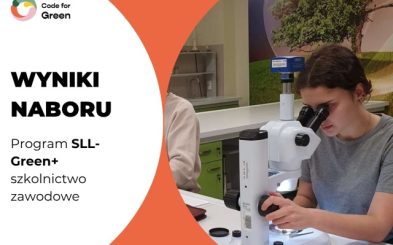
The program has been running since 2018. Each year, around 160 students participate. During lessons held twice a week, they design solutions in the areas of water, climate, and biodiversity protection. The beneficiaries of the program are the teachers, as we ensure the sustainability of the education—our goal is for the skills we teach to stay within the school.
The program develops critical thinking, collaboration, communication, creativity, agency, design and systems thinking, digital, scientific-research, and business competencies based on the economy of value (entrepreneurship). It contributes to increased engagement, responsibility for one's actions, community building, and motivation to change the world.
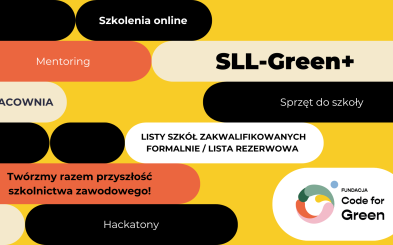
These competencies and skills are developed by working with teachers and supporting them in their work with students. The train-the-trainers formula and our continuous mentoring allow teachers to work with students in the same way. Agile methods create the opportunity to implement process-based education in schools in the form of a Living Lab (a laboratory of innovation and testing).
Currently, we run 8 labs in schools: w Zespole Szkół im. Narodów Zjednoczonej Europy w Polkowicach, w Szkole Podstawowej nr 3 w Polkowicach, w Zespole Szkół Politechnicznych im. Bohaterów Monte Cassino we Wrześni, w Samorządowej Szkole Podstawowej nr 6 im. Jana Pawła II we Wrześni, w Szkole Podstawowej nr 77 w Poznaniu, w VIII Liceum Ogólnokształcącym w Poznaniu, w Szkole Podstawowej nr 34 im. Wojska Polskiego w Poznaniu, w Samorządowej Szkole Podstawowej w Kaczanowie.
The program follows a process-based approach, which lasts throughout the entire school year.
Students choose the area they want to focus on (water, climate, biodiversity).
Field education is necessary to understand local problems and challenges in a given area. Young people gain knowledge during school field activities, research trips to national parks, research institutions, technical universities, and other educational institutions.
Empathy is essential for understanding the needs related to environmental changes, developing intrinsic motivation to act, taking responsibility, raising awareness of one's impact, and building resilience to change.
Nov 09, 2017Students diagnose a real problem that is significant for the local community.
The solution design phase must obligatorily utilize new technologies. This way, solutions like applications, social campaigns based on IT solutions, and specific devices such as air quality monitors or water-retention fences are created.
Nov 09, 2017Students learn how to implement the developed tools and secure funding.
Nov 09, 2017The Agile method allows the program to incorporate new modules needed in the learning process, such as: developing leadership skills and supportive environments (Young Change Maker module), and developing skills for creating and commercializing solutions with social value (social entrepreneurship module).
Nov 09, 2017
Invite us to your school and find out how to develop your school!
See what the children have achieved within our projects – students have created around 100 different prototypes, some of which are implemented solutions, including:
Headquarters:
Buda Ruska 19 c, 16 -503 Krasnopol
Office:
Pl. Św. Agaty 4 lok.1, 16-500 Sejny
NIP: 8442359966
KRS: 0000682455
REGON: 367582420