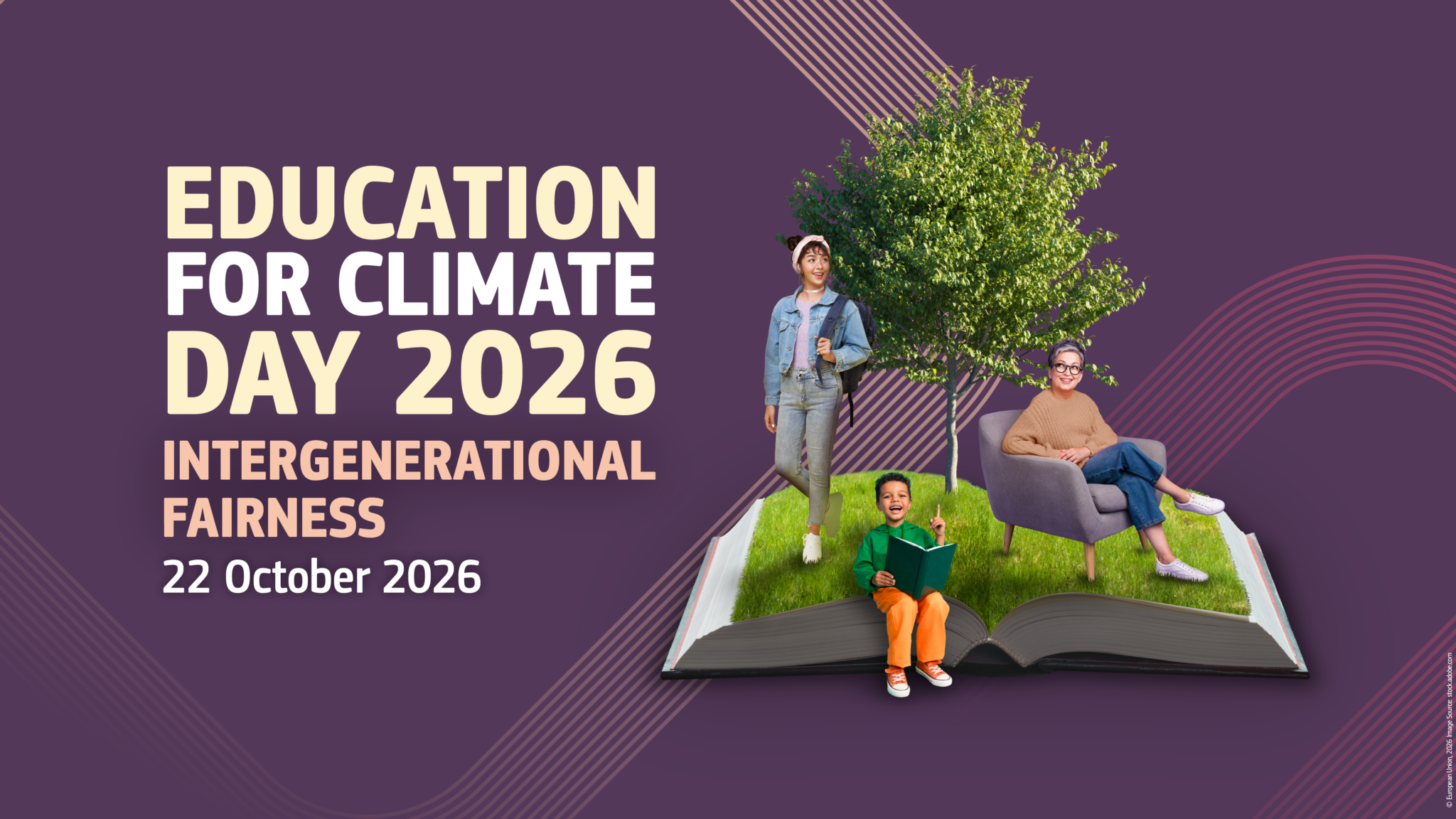
The Code for Blue programme, implemented by the Code for Green Foundation, has been selected as one of the winners of this year’s European Commission competition recognising innovative approaches to green education. Out of more than 150 applications from across Europe, the project was selected in the “Youth Leadership and Intergenerational Dialogue for Climate Action” category, which aligns with the initiative’s overall priority for this year. On Thursday, 22 October, Dr Małgorzata Snarska-Nieznańska will present the Polish approach on the main stage at Education for Climate Day in Brussels.
A competition with an increasingly selective selection process
The annual Education for Climate Coalition competition has long recognised Europe’s best practices in translating climate knowledge into real-world action, with the number of submissions growing steadily. In 2023, 69 projects were assessed, followed by 95 in 2024. In 2025, more than 100 applications were received, with nine winners selected across three thematic areas. This year, the number of submissions has exceeded 150. The selected projects are presented on stage at Education for Climate Day in Brussels, while outstanding projects from previous editions have also been showcased at high-profile events such as the COP28 climate summit.
This year’s competition is framed by a new overarching priority set by the Coalition. For 2026, the Education for Climate Coalition has chosen intergenerational justice as its leading priority, in line with the EU Strategy on Intergenerational Justice adopted in March 2026. This reflects the recognition that education is essential to shaping how successive generations understand and respond to long-term change. The category in which Code for Blue was recognised directly addresses one of the strategy’s five pillars: youth leadership and co-agency in designing climate solutions.
The CFG Method: From Knowledge to Practical Action
Code for Blue is a water education programme implemented during the 2025/26 school year in 25 schools across Poland, including primary schools, general secondary schools and technical secondary schools, engaging approximately 500 students. The programme addresses a well-documented gap in Polish environmental education: a high level of theoretical knowledge coupled with a low readiness to take action. According to the study “Students and Climate Change”, climate issues are important to nearly 70% of students, yet only 17% actively engage in climate action.
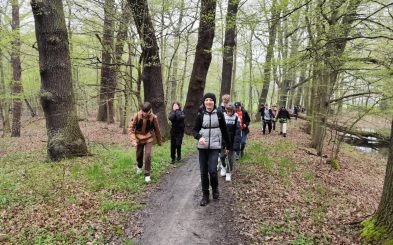
The programme is built around proven approaches: design thinking, place-based education and learning by doing. Each class began by watching Until the Last Drop, a documentary directed by Ewa Ewart. Students then conducted field research and consulted local authorities, the State Sanitary Inspectorate, Polish Waters and universities. Finally, they designed and implemented their own solutions, while developing green competences aligned with the EU’s GreenComp framework, including the ability to envision futures, systems thinking and a sense of agency.
The Scientific Context: Poland Is Drying Out
The importance of these initiatives is underscored by hard data. According to Statistics Poland’s report Poland on the Path to Sustainable Development: SDG Report 2025, Poland’s renewable freshwater resources per capita remain below the UN-defined water scarcity threshold of 1,700 m³, placing the country third from the bottom in the EU. Just 1.6% of the surface waters assessed achieved good ecological status. Satellite analyses conducted by University College London covering the period from 2002 to 2024 identify Poland as one of the European regions at risk of progressive drying. Meanwhile, the share of water retained through small-scale retention measures remains at approximately 6% — several times lower than in Spain, where it exceeds 40%. These are precisely the areas addressed by the school projects: water retention, water quality monitoring and the restoration of natural infrastructure.
What Will Poland Showcase in Brussels?
Dr Małgorzata Snarska-Nieznańska will primarily present solutions developed in the Suwałki region and Podlasie:
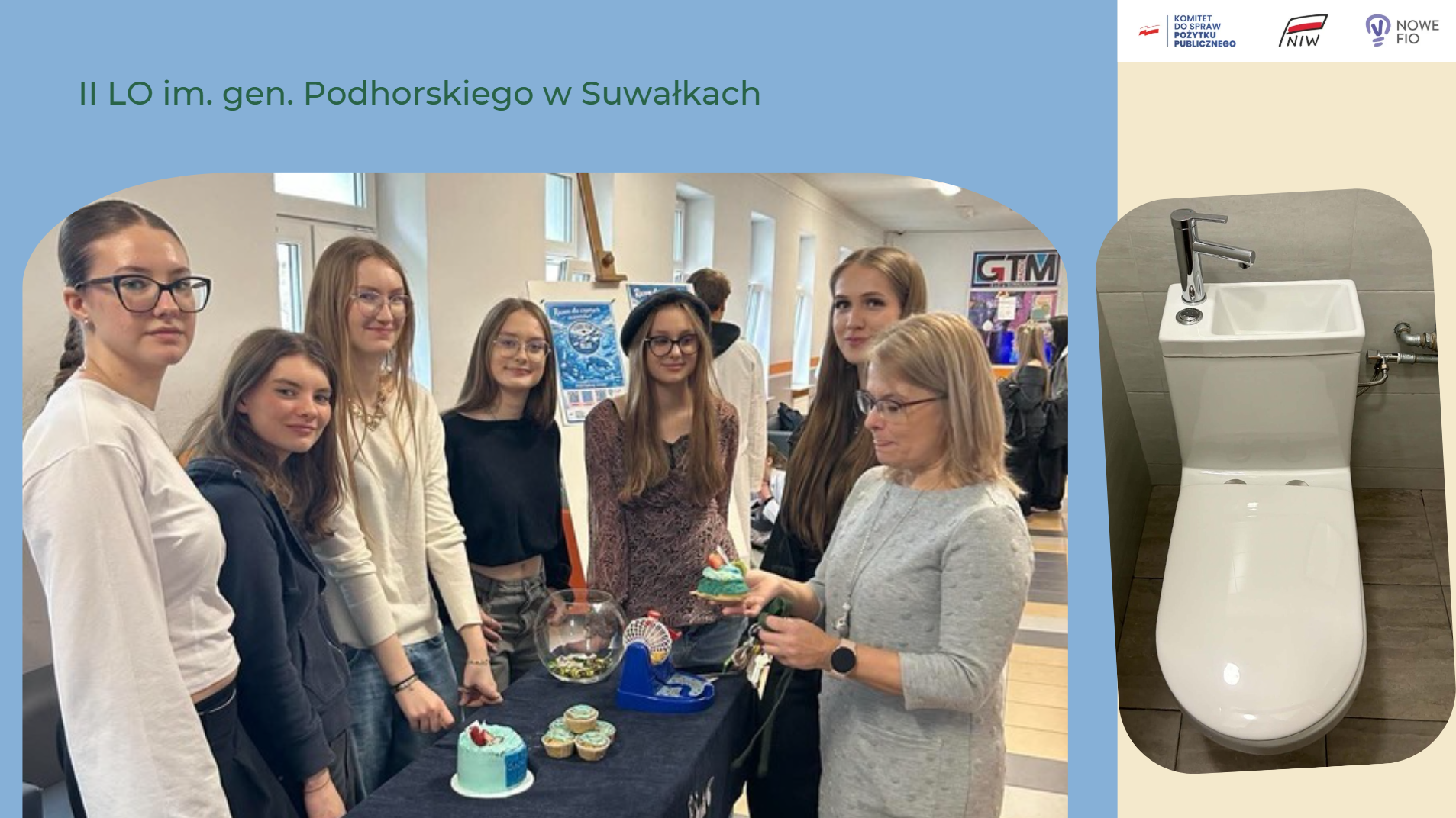
- Suwałki: General Władysław Anders Secondary School No. 2. A greywater reuse system in which water from handwashing is used to flush toilets. Eight days of measurements showed savings of more than 190 litres of clean water per week in a single school toilet.
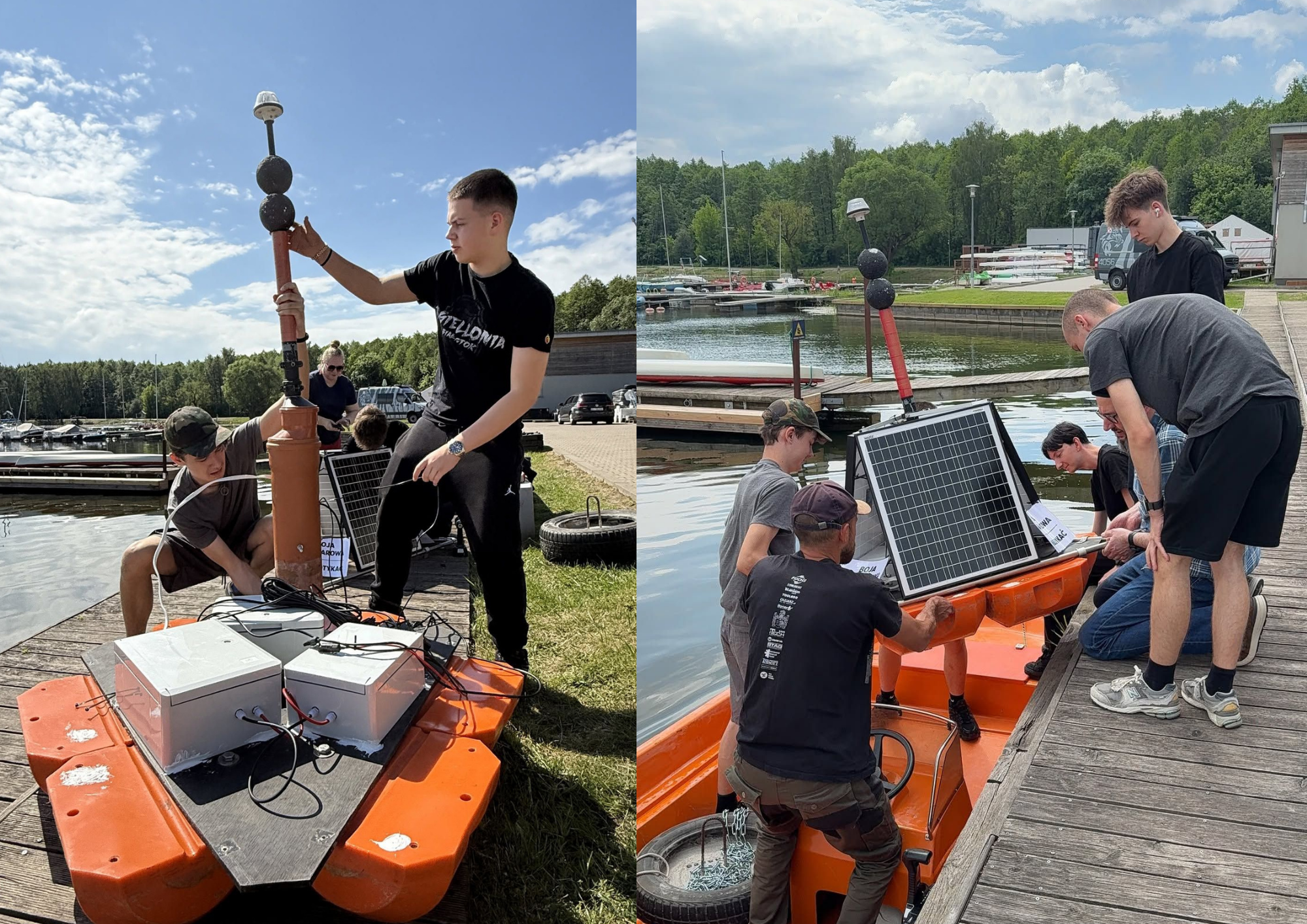
- Białystok: Infotech Programming Technical School. At Dojlidy Reservoir, which attracts more than 100,000 visitors annually, students built an autonomous, solar-powered buoy that monitors four water quality parameters around the clock: temperature, pH, conductivity and dissolved oxygen. The system provides public access to the data and automatically issues alerts when thresholds are exceeded, making it the first citizen-led water monitoring system of its kind at this reservoir.
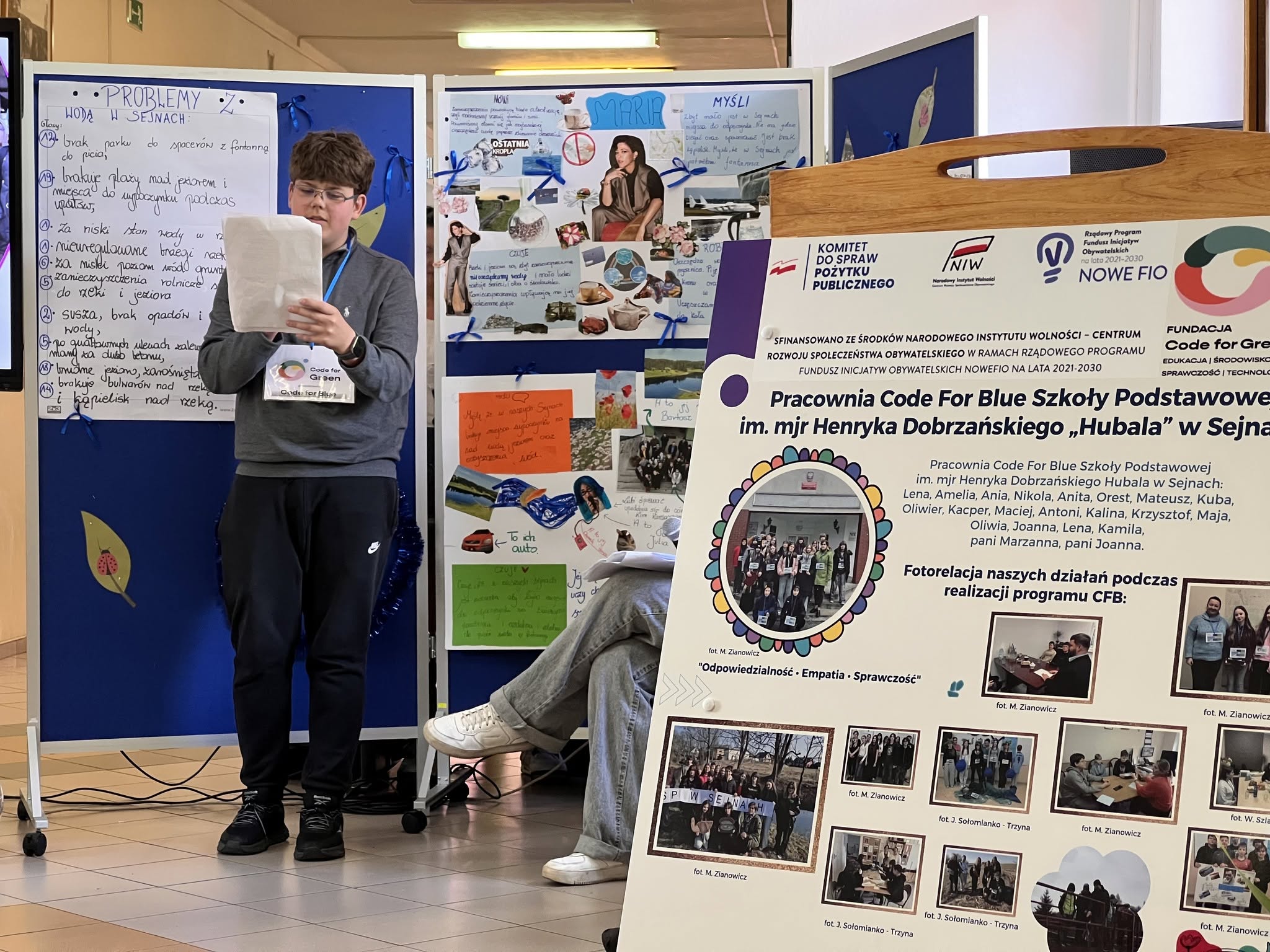
- Sejny: home to the Foundation’s headquarters. Students at a local primary school identified eutrophication in a nearby lake, traced pollution sources throughout its catchment area and presented the city authorities with a lake restoration plan as a basis for concrete action. They delivered their presentation during a session of the City Council.
What They All Have in Common: Students Went Beyond Planning
“Our students don’t learn about water from textbooks. They go out to their local river or lake, identify problems and build solutions that work. That is what we will showcase in Brussels: that Polish schools can be places of real, intergenerational change.” — Dr Małgorzata Snarska-Nieznańska, Founder and President of the Code for Green Foundation.
About the Event
Education for Climate Day 2026 will take place on 22 October in Brussels, from 9:00 a.m. to 5:00 p.m. CEST, with a livestream available. This year’s event will focus on intergenerational justice and will be opened by representatives of the European Commission’s Directorate-General for Education, Youth, Sport and Culture (DG EAC): Head of Unit Gyula Cserey and Director Antoaneta Angelova-Krasteva. The programme will feature experts from EU institutions and leading universities, including the University of Oxford, University College Dublin, Bocconi University and Aristotle University of Thessaloniki. Other participating organisations will include the German Commission for UNESCO, Belgium’s federal climate change department and the City of Paris Urban Ecology Agency.
Dr Małgorzata Snarska-Nieznańska will speak in the session “Youth Leadership and Intergenerational Dialogue for Climate Action” (2:50–3:35 p.m.), chaired by Ahmed Elamin from the Education for Climate team. Alongside the Code for Green Foundation, two other European organisations will present their work: Spanish nature conservation organisation SEO/BirdLife, represented by Blanca Serrano García, and the Ministry of National Education of Türkiye, represented by Emel Zengin. The Polish programme will therefore be featured alongside initiatives from the non-governmental sector, academia and public administration.